
The Squat: The One Exercise That Keeps You Out of a Nursing Home
The squat isn’t about fitness—it’s about independence. Learn why this one movement keeps you strong, mobile, and out of a nursing home.
Adam Phomin
9/24/20252 min read

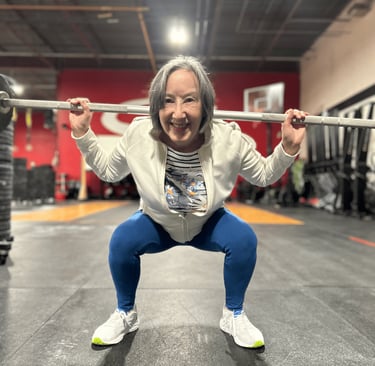
The Squat: The One Exercise That Keeps You Out of a Nursing Home
Let’s get real.
If you can’t get off the toilet by yourself, life changes fast.
And not in a good way.
Once someone else has to help you stand up, your independence is already gone.
That’s why the squat matters.
Not as an exercise.
As a life skill.
Squatting Is Daily Life
Every time you:
Sit on a couch
Get in or out of a car
Lower yourself onto a toilet
Stand up from the floor
You’re squatting.
Lose that ability and you’re not just weaker—you’re dependent.
The squat isn’t about fitness goals or gym culture.
It’s about staying capable enough to live life on your own terms.
Move It or Lose It
Aging gives you two options:
Stay strong and mobile
Let gravity win
The squat is your best defense against:
Frailty
Falls
Loss of balance
Needing help for basic tasks
Here’s what regular squatting actually does:
Keeps you mobile – If you can squat, you can stand, walk, and move freely
Prevents falls – Strong legs and hips mean better balance and reaction
Builds usable strength – Legs, glutes, and core work together the way they should
Protects independence – You can get up when life knocks you down
This isn’t dramatic.
This is reality.
“But I Haven’t Squatted in Years…”
Good news: it’s not too late.
You don’t need perfect form or deep squats on day one.
You need consistent practice.
How to Squat Safely
Feet: Shoulder-width apart, toes slightly out
Brace: Tighten your core like you’re about to be bumped
Hips back: Sit down like there’s an invisible chair
Control: Lower as far as you can with heels on the ground
Stand strong: Drive through your feet and stand tall
Scaling the Squat (This Is Where Most People Should Start)
If full squats feel impossible, start here:
Chair squats – Sit down and stand up from a chair
Assisted squats – Hold a railing or counter
Partial squats – Go as low as you can with control
Progress comes from showing up, not from forcing depth.
A Few Simple Rules
Warm up before you squat
Discomfort is normal; sharp pain is not
Consistency beats intensity
A simple rule that works:
5 sets of 5 squats, two to three times a week
That alone will change how you move—and how long you stay independent.
Why We Squat in the 5AM Squat Club
We squat because:
Strength is insurance
Mobility is freedom
Independence is earned
You don’t need machines.
You don’t need a gym.
You don’t need fancy programming.
You need to practice standing up under your own power—for the rest of your life.
The Bottom Line
The squat keeps you out of a nursing home.
It keeps you off the floor.
It keeps you living life without asking for help.
Start squatting now.
Keep squatting forever.
Because if you can’t squat…
someone else is doing things for you that you should still be able to do yourself.
And that’s a future worth training to avoid.