
The Importance of Doing Hard Shit
Why doing hard shit daily builds discipline, resilience, and purpose—and how the 5AM Squat Club turns discomfort into a simple morning practice.
Adam Phomin
5/25/20253 min read
The Importance of Doing Hard Shit
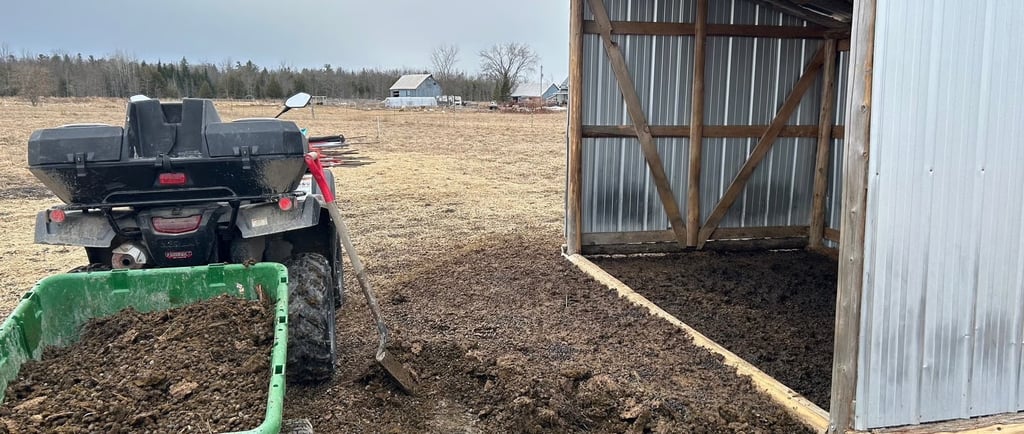
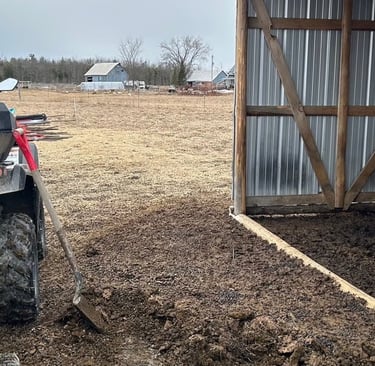
The idea came to me while I was out in the field, shoveling shit into a trailer. Literal shit. Heavy shovel. Wind in my face. No one around to see it.
It’s not fun work. No one wakes up excited to shovel shit.
But it’s necessary.
That shit becomes compost. The compost feeds the soil. And the soil grows the food that feeds our family. It’s part of a bigger cycle—dirty, humbling, and completely essential.
And while I was out there, boots sunk into the ground, shoveling for what felt like hours, I was reminded of something simple and uncomfortable:
Doing hard things matters.
Not occasionally.
Not when it’s convenient.
But regularly.
For our bodies.
For our minds.
For our emotional health.
And for the example we set for our kids.
I Didn’t Grow Up This Way — I Chose It
I didn’t grow up on a farm. I grew up in the city. I played sports. I learned discipline, effort, and teamwork through athletics and physical work alongside my dad.
But I didn’t grow up with daily, unavoidable hard labor.
I’ve talked to people who did—kids who spent summers and weekends doing physical work because it needed doing. No excuses. No shortcuts. When it was time to work, you worked.
That kind of upbringing builds something deep: resilience, self-trust, and quiet confidence.
So later in life, I chose it.
Now, I’m working physically harder than I ever have—by design.
Not because I have to.
Because it’s good for me.
Comfort Is Overrated
Modern life is engineered to remove friction. You can order food from your phone, outsource your chores, and avoid discomfort almost entirely.
And yet—fatigue, anxiety, depression, and lack of purpose are everywhere.
We weren’t built to coast.
We weren’t meant to live without resistance.
Challenge sharpens us.
Effort grounds us.
Struggle gives meaning to progress.
When life gets too easy for too long, something inside us softens.
What Hard Things Actually Build
Doing hard things doesn’t just build muscle.
It builds:
Discipline
Confidence
Emotional regulation
Mental toughness
It trains your nervous system to stay calm under pressure.
It teaches your brain not to quit when things get uncomfortable.
It reminds you—viscerally—that you are capable.
And when your kids see you choosing effort over ease?
They learn far more than anything you could ever say.
What Counts as “Hard”?
You don’t need to live on a farm.
You don’t need extreme challenges.
You just need intentional resistance.
Hard can look like:
Getting up early to train when no one’s watching
Lifting something heavy when you’re tired
Taking a cold shower
Starting the project you’ve been avoiding
Having the uncomfortable conversation
Failing publicly—and showing up again anyway
If it makes you uncomfortable, it’s probably worth doing.
Failure Isn’t the Problem — Avoidance Is
We’ve been taught to avoid failure.
But failure is feedback.
Failure is how you learn.
Failure is how you build durability.
If you never fail, you’re not pushing far enough to grow.
The goal isn’t perfection.
The goal is to step far enough outside your comfort zone that growth is unavoidable.
This Is a Practice
Doing one hard thing won’t change your life.
Doing hard things daily will.
Resilience is built the same way strength is:
Through repetition.
Through progressive challenge.
Through showing up when it would be easier not to.
That’s what the 5AM Squat Club is.
A daily practice of choosing effort over comfort—
so the rest of the day gets easier.
The Bottom Line
If you’re not testing yourself, you’re not growing.
And if you’re not growing, you’re slowly decaying.
So shovel the shit.
Lift the weight.
Get up early.
Start before you feel ready.
Fail. Learn. Show up again.
Not because you have to.
But because the value is in the choosing.
That’s where real life begins.